About the procedure
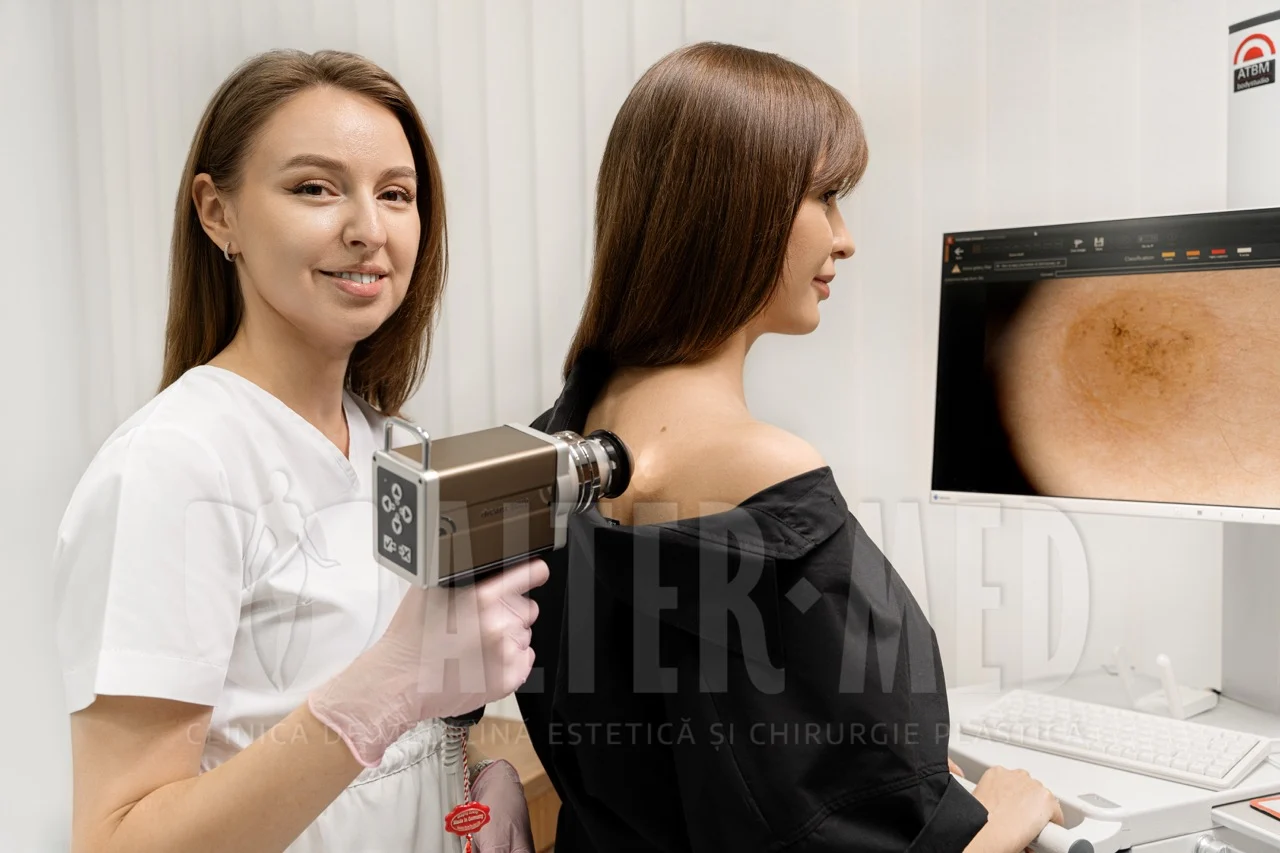
Mole mapping is part of Alter-MED’s dermatology services and belongs within a monitoring plan. Photographic documentation and dermoscopic examination have complementary roles: one supports comparison over time, while the other assesses a lesion’s details. The doctor determines what should be documented in your case.
At Alter-MED, FotoFinder documentation allows images to be compared between visits. The doctor monitors new or changing moles and decides which need detailed examination.
Your consultation
Discuss the number of moles, changes noticed and relevant personal or family history. Ask which areas are photographed, which images are retained and how you can receive the assessment findings.
What to expect
- Assess whether mapping is useful and explain the proposed documentation process.
- Record images and examine the lesions selected by the doctor for assessment.
- Agree on a review interval and how images will be compared.
Recovery and follow-up
Documentation is not a removal procedure. If a lesion needs further investigation, that follows its own pathway rather than automatically waiting for the next mapping session.
What to consider
Photographs complement the consultation through comparison and medical interpretation. The doctor explains which changes can be monitored and when additional investigations are needed.
Common questions
Is this the same as dermoscopy?
Not exactly. Mapping supports documentation and comparison; dermoscopy examines lesion details, and the doctor may combine them.
How often is it repeated?
The interval depends on individual risk assessment and the images, rather than one timetable for everyone.
Discuss the cost before treatment.
Ask for an estimate for your case and clarify what is included: consultations, the procedure, investigations and follow-up visits. The plan and final cost are agreed after assessment.
Request a consultationInformation to help you prepare for a consultation. Recommendations and treatment plans are agreed individually with your doctor.